Client
Itsbella.ai
DURATION
1 Month
Year
2025
Role
Senior Product Designer
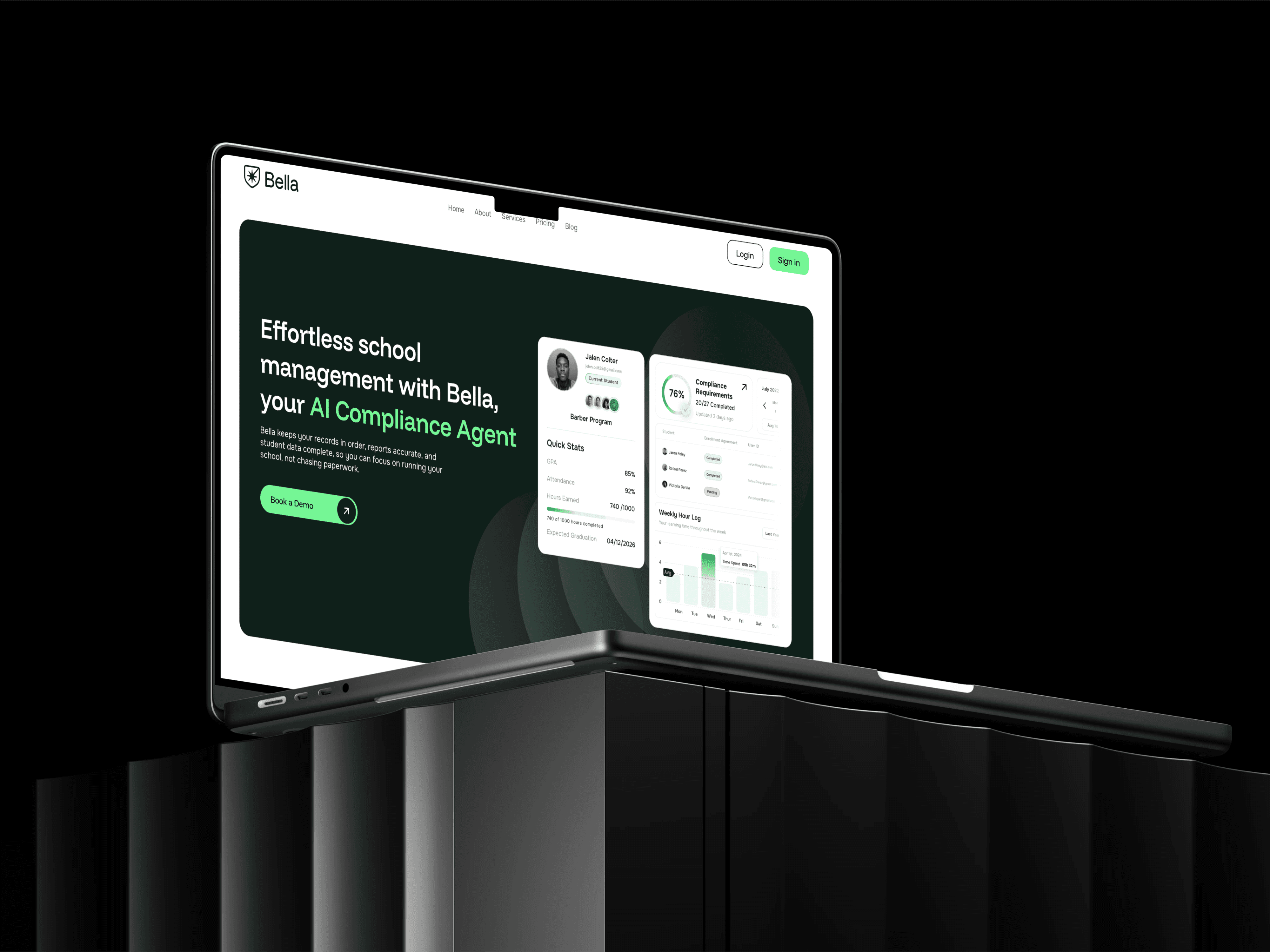
As the lead designer, I partnered closely with the founder and PM to shape how Bella would be introduced to this audience. The landing page wasn’t just a marketing surface, it was the first moment where users decided whether Bella felt safe enough to trust.
Overview
Bella is a compliance and student management platform built for vocational schools. Its primary users, school owners and administrators, operate in high-risk environments where mistakes can affect audits, funding, and accreditation.
Early reviews showed that while the product was strong, users hesitated almost immediately. My responsibility was to identify where trust was breaking down and determine how to address it without redesigning the entire experience.
The UX Problem
(Identified Through Review & Exploration)
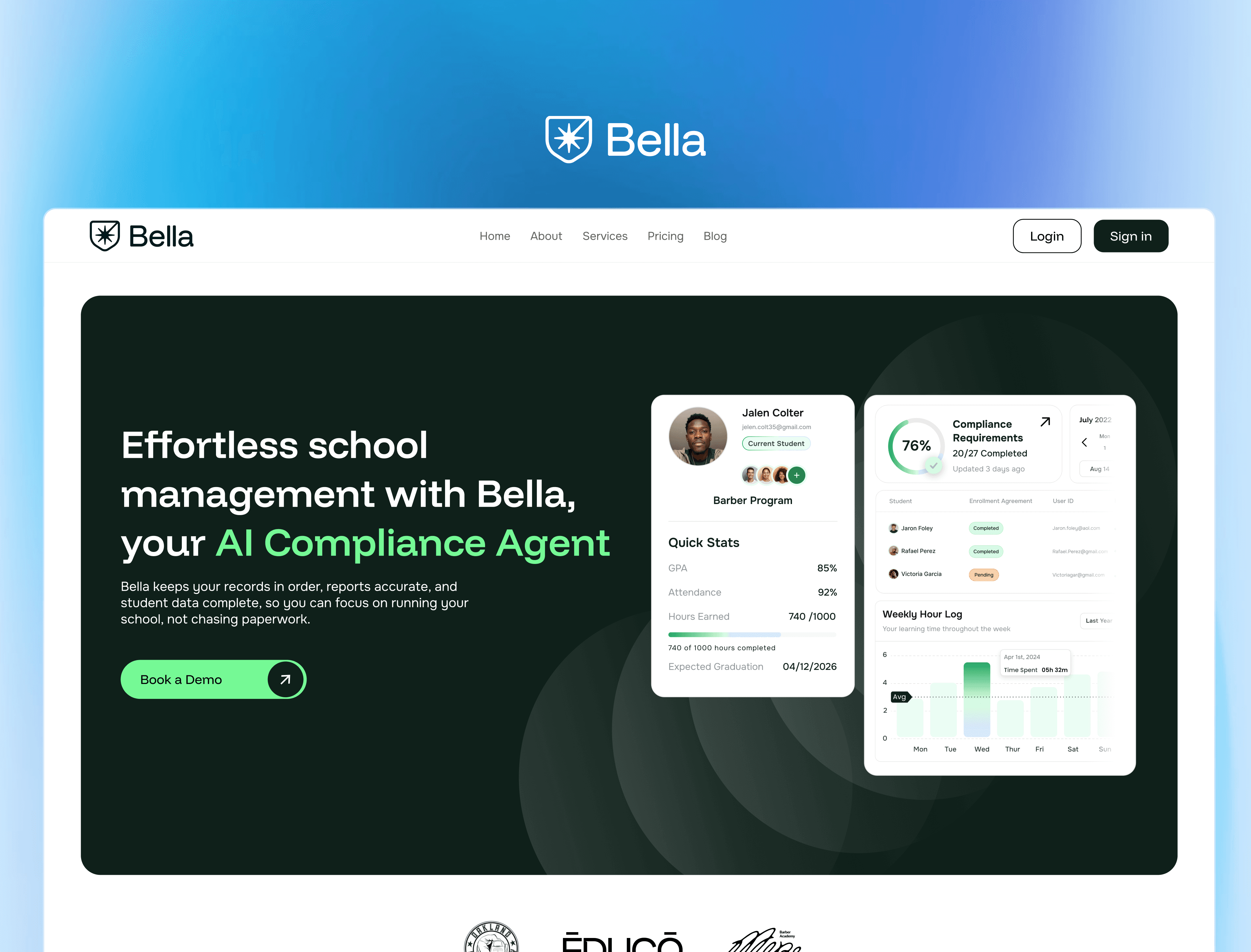
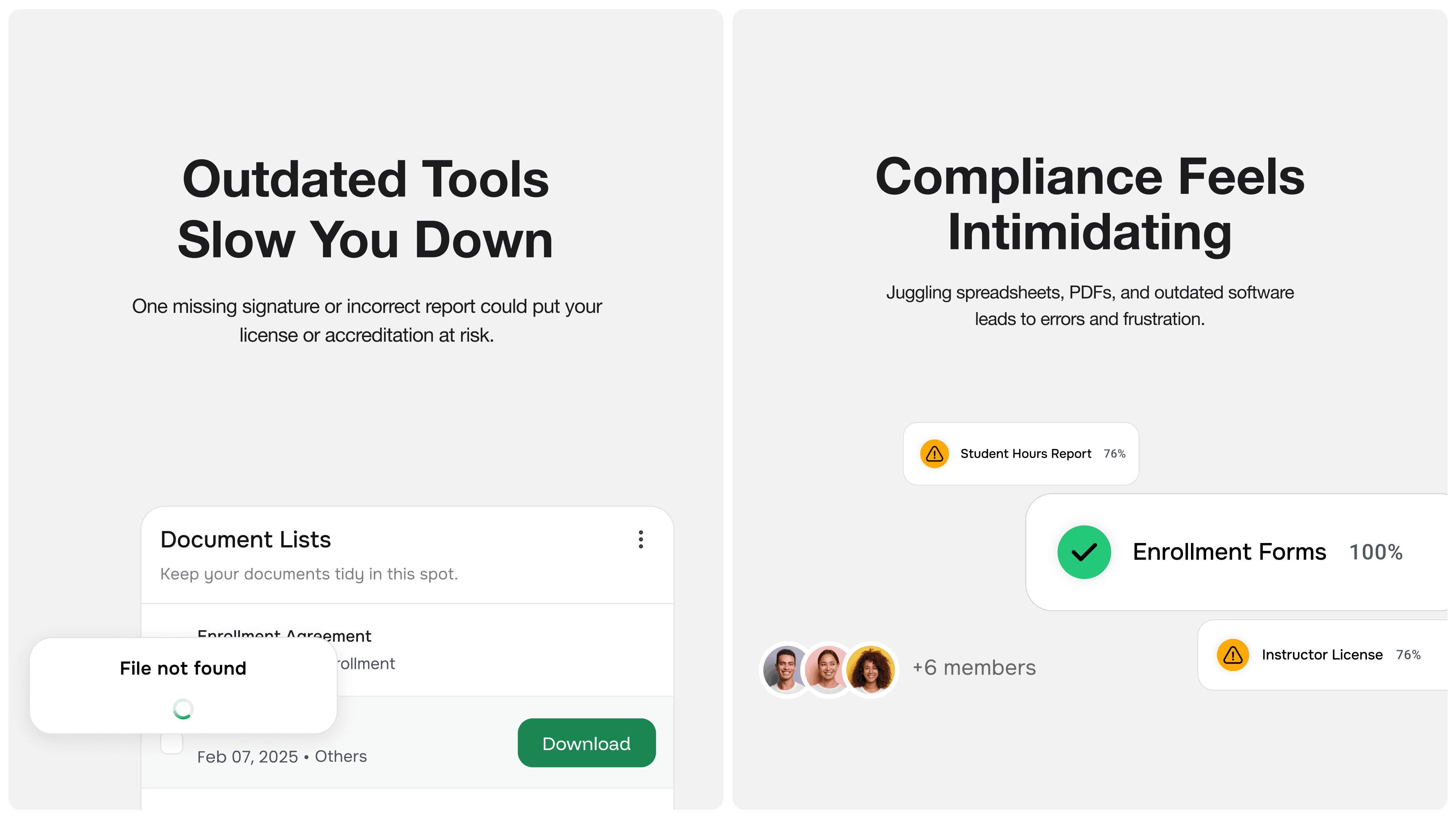
While reviewing early versions of the page and walking through the flow with stakeholders, I noticed a consistent pattern: Users were being asked to understand too much before they felt secure enough to proceed.
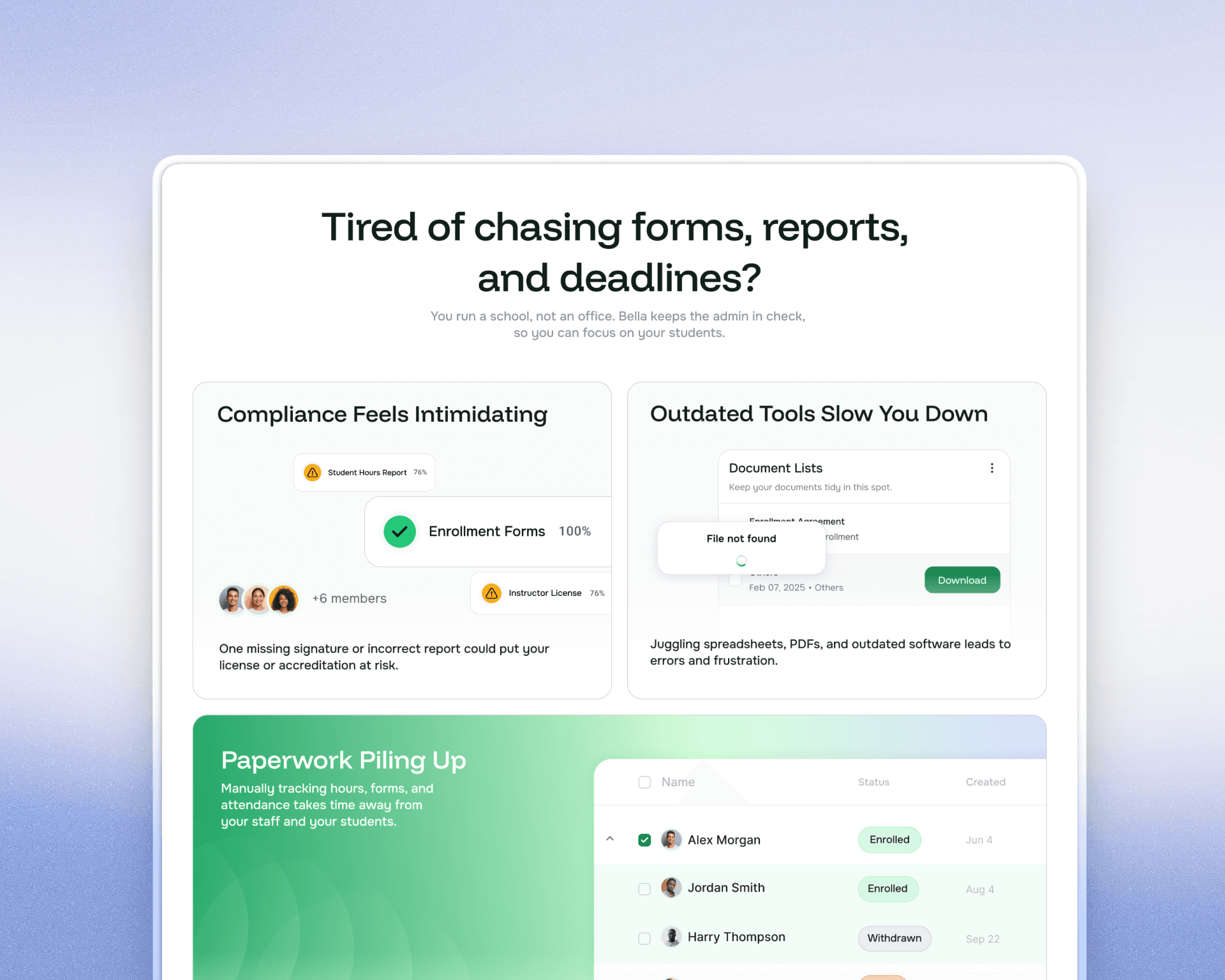
The experience introduced multiple concepts at once: AI, automation, reporting logic, and compliance rules.
This created friction at the most sensitive point in the journey: the entry moment, where confidence matters more than comprehension.
Instead of first answering a simple question:
“Is this right for my school?”
Expectation vs. Experience
What users needed
“Reassure me quickly. I’ll explore the details once I trust you.”
What they experienced
An experience that required interpretation and evaluation before trust had been established.
From a design perspective, this wasn’t a feature problem.
It was a cognitive load and trust calibration issue.
My Hypothesis
If the entry experience reduced interpretation effort and focused first on reassurance, users would feel more confident taking the next step, without needing to fully understand how everything worked upfront.
Design Decisions I Led
Rather than proposing a broad redesign, I advocated for a narrow, high-impact intervention focused on the first few seconds of the experience.
I led the decision to:
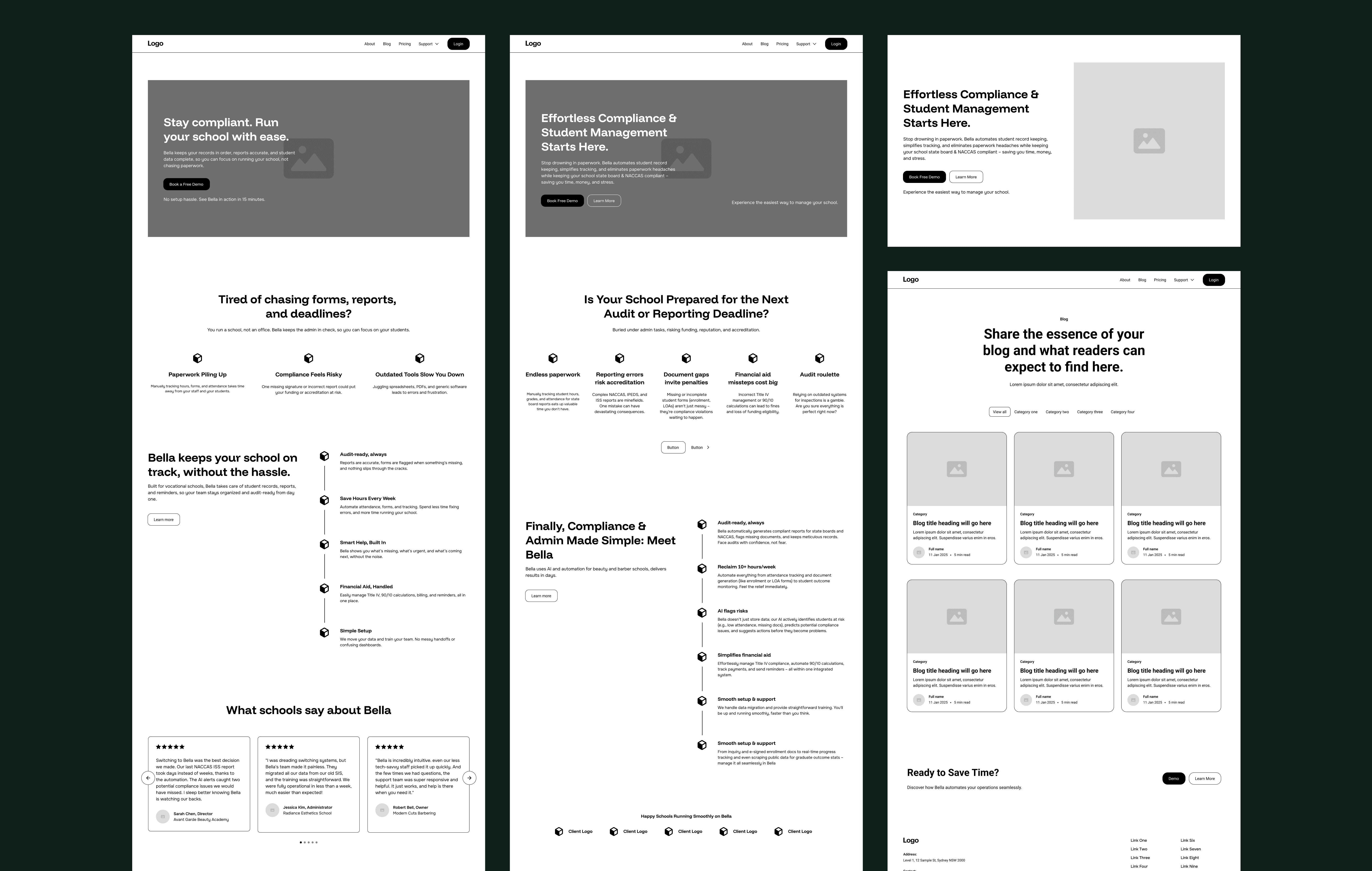
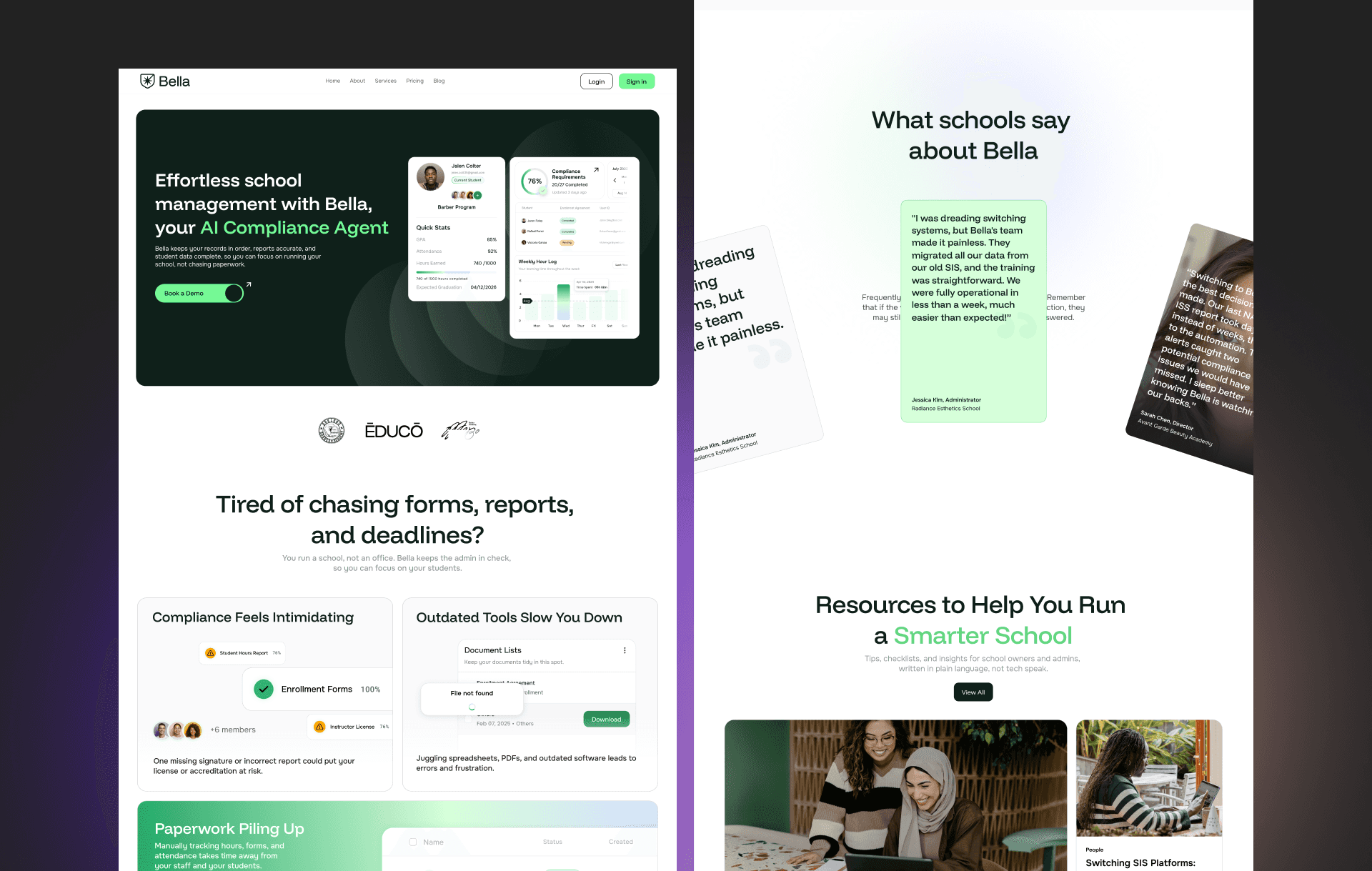
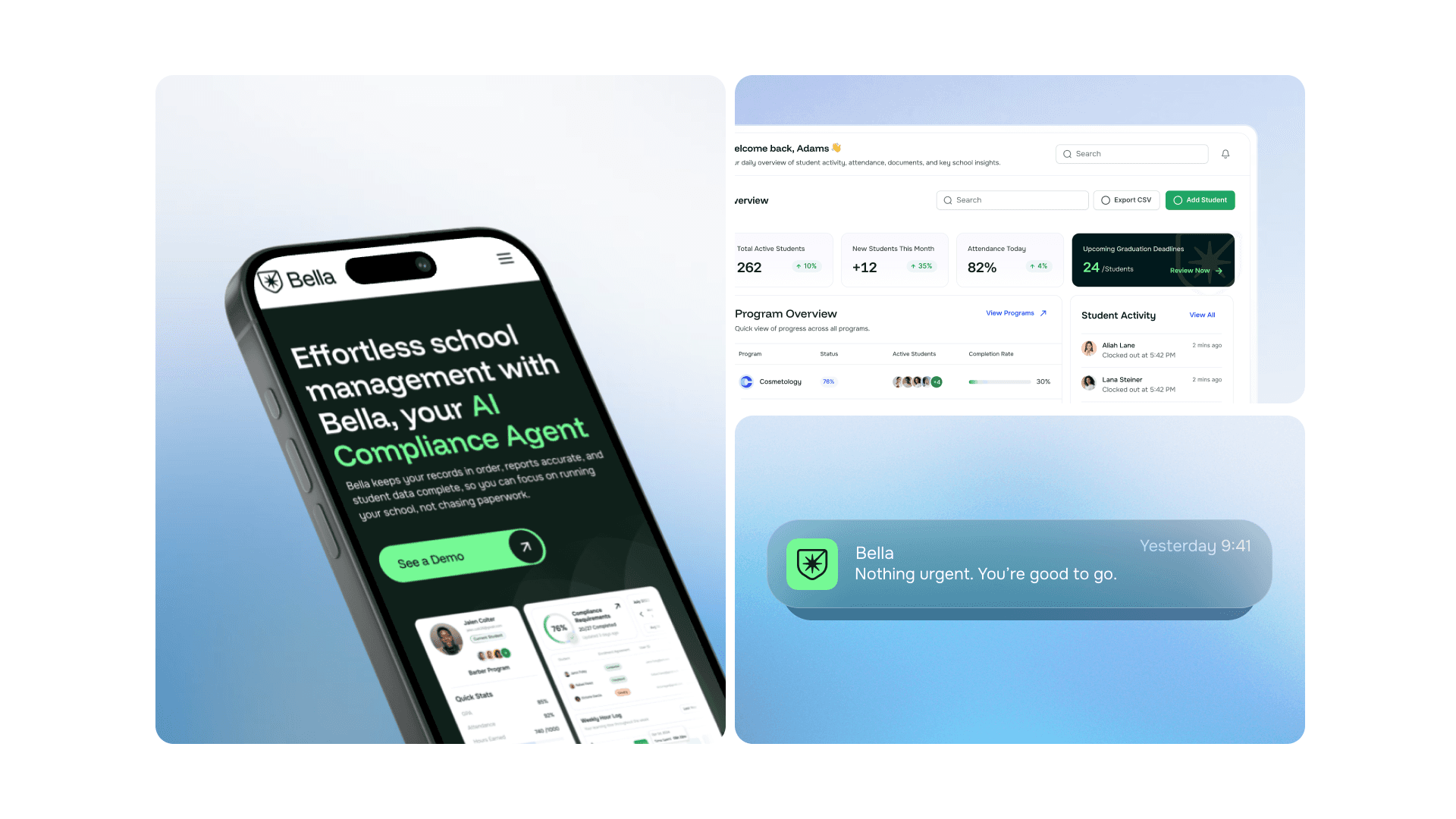
Simplify the hero section to a single, grounded value statement
Reduce competing messages and secondary actions at entry
Use the product visual as quiet validation, not explanation
I intentionally deferred AI explanations and feature depth to later sections, once trust had been established.
This direction required alignment with the founder, who initially wanted to surface more product capability early. I framed the tradeoff clearly: confidence versus completeness. We aligned on prioritizing trust first, knowing that curiosity would follow.
How the Work Took Shape
Why This Approach Worked
Impact (Qualitative)
Reflection